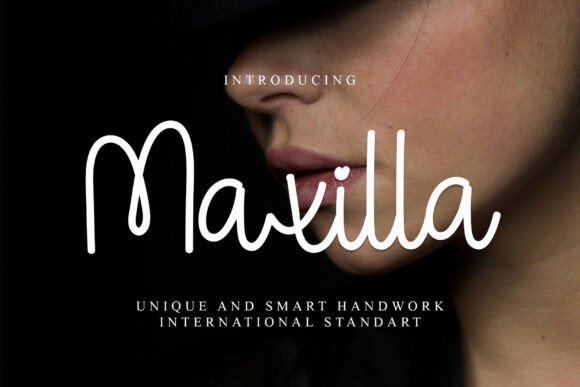
Maxilla Font: A Handwritten Typeface for Modern Brand Content
In the fast-paced world of digital marketing, every pixel matters. Whether you are designing an Instagram story, a YouTube thumbnail, or a campaign banner, the typeface you choose directly affects how your audience perceives your message. Maxilla is a unique and elegant handwritten font that brings a personal, crafted feel to any visual. Its flowing strokes and refined character make it stand out in crowded feeds, while its legibility ensures your message lands clearly. For marketers, content creators, and social media designers, Maxilla is more than a font—it is a strategic asset for building brand recognition and driving engagement.
Maxilla belongs to the Script Amp category, a collection of typefaces that emphasize expressive, hand-drawn aesthetics. As a script font, it carries the warmth of handwriting without sacrificing polish. This balance makes it suitable for both high-end branding and everyday social content. Its personality is approachable yet sophisticated—ideal for businesses that want to communicate authenticity without appearing amateurish.
The Visual Personality of Maxilla
Maxilla offers a distinctive visual voice. Its letterforms are fluid, with gentle curves and natural variation in stroke weight. This gives it a human quality that machine-generated fonts often lack. The font feels personal, almost as if it was written by hand for each viewer. That emotional connection is exactly what modern audiences respond to. In an era where consumers crave authenticity, using a handwritten script like Maxilla signals that your brand values genuine communication over sterile perfection.
The mood of Maxilla is elegant but not stiff, romantic without being cliché. It works beautifully on wedding invitations and greeting cards, as the product description suggests, but its versatility extends far beyond those applications. For a skincare brand launching a new product, Maxilla can convey softness and luxury. For a coffee shop announcing a seasonal blend, it adds a handcrafted, artisanal touch. The font adapts to the context while maintaining its core identity—a rare quality in display typefaces.
Social Media Graphics That Stop the Scroll
Social feeds are noisy. Users scroll quickly, and you have a fraction of a second to capture attention. Maxilla excels in this environment because its handwritten form feels different from the hundreds of sans serif and geometric fonts competing for the same gaze. When you use Maxilla for headlines on Instagram posts, Pinterest pins, or Facebook ads, you introduce an element of surprise. The viewer pauses, and that pause is the beginning of engagement.
For reels covers and video thumbnails, where text needs to be readable at small sizes, Maxilla performs well when used for short phrases. A two- or three-word headline set in Maxilla creates a focal point that draws the eye. Pair it with a clean background, and the font becomes the hero of the composition. This is especially effective for inspirational quote graphics, product teasers, and sale announcements.
Email Headers and Website Banners
Email marketing remains one of the highest-ROI channels, but open rates depend on subject lines and preview text. Once a subscriber opens your email, the header image needs to reinforce the message quickly. Maxilla works well in email headers for promotional campaigns, event invitations, and content series announcements. Its handwritten quality feels less corporate and more conversational, which aligns with the one-to-one nature of email communication.
On landing pages and website banners, Maxilla can be used for hero headlines or call-to-action text. Because it is a display font, it performs best when applied to short, impactful statements. Use it to highlight a promotion, introduce a new collection, or welcome visitors to a limited-time event. The font's elegance adds perceived value to whatever it accompanies.
Creating Visual Hierarchy and Clear Messaging
Strong visual hierarchy is the backbone of effective design. Maxilla helps establish hierarchy naturally because its decorative nature signals importance. When you set a headline in Maxilla and follow it with body text in a clean sans serif, the contrast immediately tells the reader where to look first. This structure improves readability and ensures your core message is not lost in the layout.
For social media graphics, use Maxilla for the primary callout—the offer, the date, the key phrase—and let supporting details live in a neutral sans serif font like Open Sans or Montserrat. This pairing gives you both personality and clarity. The eye moves from the expressive headline to the functional body text without confusion. It is a simple technique that elevates almost any campaign asset.
Readability in Fast-Scrolling Feeds
One concern with script fonts is legibility, especially on mobile screens. Maxilla addresses this with well-defined letterforms and consistent spacing. The font avoids excessive flourishes that can blur at small sizes, making it more readable than many decorative scripts. That said, it is still a display font, so use it for short text blocks rather than long paragraphs. Headlines, titles, callouts, and logo marks are its natural home.
When designing for thumbnails or mobile previews, keep the text large and the background simple. Avoid placing Maxilla over busy images or patterns. Instead, let the font breathe against a solid color or a subtle gradient. This approach maintains legibility while preserving the font's elegant impact.
Influencing Audience Perception and First Impressions
First impressions happen in milliseconds online. The typeface you choose communicates values before a single word is read. Maxilla conveys care, attention to detail, and a human touch. For a product launch, using this font in your announcement graphic suggests that the product itself is thoughtfully crafted. For a personal brand, it signals approachability and warmth. These perceptual cues shape how audiences feel about your content before they evaluate the substance.
Seasonal promotions also benefit from Maxilla's personality. A holiday sale graphic set in a handwritten script feels more festive and personal than one set in a standard font. The same applies to limited-edition releases, birthday campaigns, and anniversary celebrations. The font adds a layer of emotional resonance that standard typefaces cannot replicate.
Realistic Campaign Applications
Let us look at a few practical examples of how Maxilla functions in real marketing scenarios.
- Sale announcement: A retailer promoting a 24-hour flash sale uses Maxilla for the headline "Flash Sale" in white over a dark background. The script font creates urgency while feeling exclusive and high-end. Below it, a small sans serif line states the discount percentage and expiration time.
- Product teaser: A beauty brand launching a new lipstick line uses Maxilla for the product name "Velvet Rose" on a soft pink background. The font's elegant curves mirror the product's luxurious positioning. The image is simple: the product name, a subtle floral accent, and the brand logo in a modest sans serif.
- Inspirational quote graphic: A wellness influencer posts a quote set in Maxilla, with the font's flowing letters adding emotional weight to the words. The background is a muted pastel, and the quote is centered. The graphic feels personal and shareable, increasing the likelihood of engagement and reposts.
- Webinar banner: A digital marketing agency promoting a free webinar uses Maxilla for the main title "Build Your Brand" and a clean serif font for the subtitle. The contrast between the script headline and the editorial serif body creates a sophisticated, professional look that appeals to business owners.
Font Pairing for Cohesive Brand Identity
Maxilla pairs well with several typeface families, allowing you to build a cohesive brand system. For captions and body copy, a clean sans serif font such as Lato, Roboto, or Work Sans provides a neutral counterpoint that lets Maxilla take center stage. This combination is versatile for social posts, blog headers, and email templates.
For a more editorial or traditional feel, pair Maxilla with a serif font like Playfair Display or PT Serif. The script headline combined with serif body text evokes print magazines, luxury catalogs, and premium editorial design. This pairing works well for lookbooks, brand manifestos, and long-form content teasers.
When using Maxilla in logo design, keep the accompanying brand typeface simple. A logotype set in Maxilla paired with a minimalist sans serif for the tagline creates a memorable and balanced identity. The script font provides distinction, while the sans serif ensures the brand remains accessible and legible at small sizes.
For packaging design, Maxilla can communicate artisanal quality when used for product names or ingredient callouts. Pair it with a straightforward sans serif for nutritional information or usage instructions. This approach maintains the handmade feel without sacrificing practical readability.
Commercial Licensing and Practical Considerations
Before integrating Maxilla into client campaigns, branded templates, or digital products, review the commercial licensing terms. Fonts in the Script Amp category often require separate licenses for commercial use, especially in applications like logo design, merchandise, advertising, and digital assets sold to third parties. Understanding the license ensures you remain compliant while using the font to its full potential.
When you invest in a premium font like Maxilla, you are not just buying letterforms—you are acquiring a design tool that can differentiate your brand across every touchpoint. From social media graphics and YouTube thumbnails to website banners and email headers, Maxilla brings a consistent, recognizable aesthetic that strengthens brand identity over time.
Maxilla in Modern Typography and Brand Identity
The landscape of modern typography is rich with options, but few handwritten fonts balance elegance and utility as well as Maxilla. It belongs to a select group of creative fonts that work across media without losing their character. Whether you are designing for print or digital, Maxilla holds its own as a display font that commands attention while remaining approachable.
For marketers building a brand identity, consistency in typography is non-negotiable. Using Maxilla as a headline or accent font across campaigns creates visual continuity. Audiences begin to associate the handwritten style with your brand, increasing recognition and recall. Over time, this association becomes a valuable part of your design assets library.
In web design, Maxilla can be used sparingly for hero sections, testimonial quotes, or navigation hover states. Its impact is strongest when reserved for moments that need emphasis. Overusing a script font dilutes its effect, so strategic placement is key. A single headline on a landing page, set in Maxilla, can define the entire visual tone of the site.
For editorial design, whether digital or print, Maxilla adds a layer of narrative warmth. It suits magazine titles, section headers, and pull quotes. Paired with a serif font for body text, it creates a reading experience that feels both curated and intimate.
In packaging design, Maxilla communicates craftsmanship. A product label set in this font suggests attention to detail and a human-centered approach. This is particularly effective for food, beverage, beauty, and lifestyle products where brand story matters as much as product quality.
Ultimately, Maxilla is a tool for connection. It helps marketers, creators, and designers speak to audiences in a voice that feels personal, polished, and intentional. In a digital world where so much content blends together, that human touch is exactly what sets memorable campaigns apart.