Bubble Yesterday: A Handwritten Script Typeface for Modern Web Design
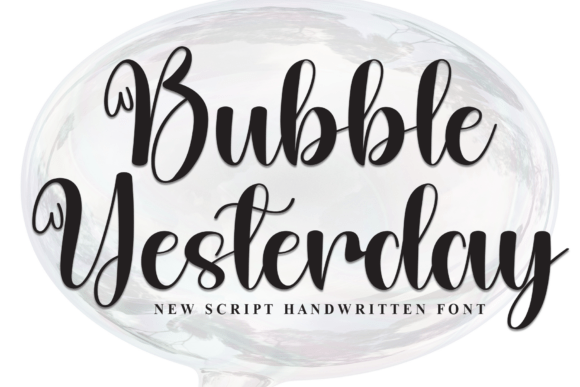
When you build websites every day, you develop an eye for type that feels both intentional and effortless. Bubble Yesterday is exactly that kind of typeface. It is a script font that captures the natural flow of real handwriting, with smooth curves and authentic pen strokes that never feel stiff or mechanical. For web designers, UI designers, and digital product creators, this font offers a way to inject warmth and personality into layouts without sacrificing professionalism. Whether you are designing a landing page for a creative service, a boutique online store, or a coaching website, Bubble Yesterday brings a natural, elegant charm that sets the tone before a visitor reads a single word.
What Makes Bubble Yesterday Stand Out as a Display Font
Bubble Yesterday belongs to the Script Amp category, and it is best used as a display font rather than a workhorse typeface for long paragraphs. Its letterforms are fluid and connected, mimicking the rhythm of real handwriting. The strokes have varying thickness, which gives the font a handcrafted feel that pairs well with clean, structured typography. This font is not trying to be neutral. It has personality. It leans casual yet refined, making it suitable for hero sections, brand headers, and call-to-action areas where you want to create an immediate emotional connection with the user.
From a visual hierarchy standpoint, Bubble Yesterday works beautifully at larger sizes. When you place it in a website header or a hero title, it immediately signals that the brand values authenticity and creativity. The font does not compete with body copy when used sparingly, and it rewards designers who understand the value of contrast in typography. If you are working on a digital brand kit, this font can serve as the accent voice that breaks up more formal sans serif or serif text blocks.
Using Bubble Yesterday in Website Headers and Hero Sections
The hero section is the first thing a visitor sees, and type choice here is critical. Bubble Yesterday works exceptionally well in hero titles because its handwritten quality draws the eye without shouting. For a creative portfolio site, imagine a full-width hero image with a short phrase like "Designs That Tell Your Story" set in Bubble Yesterday over a muted background. The font creates a sense of human touch that balances the digital nature of the layout. The same approach works for a boutique online store. A hero line such as "Handpicked for You" in Bubble Yesterday feels personal and inviting, which can positively affect how users perceive the brand before they start browsing.
In landing page design, especially for coaching websites, course sales pages, or digital products, Bubble Yesterday can anchor the headline while a simple sans serif font handles the subheadline and body copy. This pairing creates a clear visual hierarchy. The script font draws attention first, then the sans serif provides clarity and structure. For conversion-focused layouts, this kind of hierarchy helps guide the eye toward the call-to-action button.
Practical Applications for Online Stores and Blog Graphics
Online store owners can use Bubble Yesterday in banner headlines, promotional graphics, and product badges. Because it mimics handwriting, it feels approachable and trustworthy, which is valuable for e-commerce. A banner that says "Limited Edition Drop" in this font creates urgency while keeping the tone friendly. For blog graphics, Bubble Yesterday works well for pull quotes, section dividers, and featured post titles. It adds visual variety to what might otherwise be a wall of text. Bloggers and content creators who want to establish a consistent visual voice will find that this font helps their branded graphics feel cohesive across social media, email headers, and website banners.
Social media graphics are another natural fit. The font scales well for Instagram stories, Pinterest pins, and YouTube thumbnails when used at display sizes. Its smooth strokes remain legible even when overlaid on images, especially if you add a subtle shadow or a semi-transparent background behind the text. For digital ads, Bubble Yesterday can be the typeface that makes a headline feel native to the platform rather than templated.
Readability on Mobile Screens and Responsive Layouts
Readability is always a concern with script fonts in web design. Bubble Yesterday handles this well because its letterforms are open and not overly ornate. At larger sizes, it remains clear. However, I recommend using it at 24px and above for headings and keeping it out of body copy, small buttons, or navigation menus. For mobile screens, test the font at various breakpoints. It tends to hold up well on retina displays, but on smaller screens, you may want to increase letter-spacing slightly to maintain legibility. If you are using Bubble Yesterday on a dark background, ensure there is enough contrast. A light background with dark text is the safest bet, but a dark background with a light, warm tone can also work if the font size is generous.
Image overlays require extra care. When placing Bubble Yesterday over a photograph, use a dark or light overlay behind the text to maintain readability. The font's stroke contrast can get lost on busy backgrounds, so a simple gradient or solid color strip underneath the headline is a practical solution. For responsive layouts, always set the font size in relative units like rem or vw so it scales smoothly across devices.
Font Pairing Strategies for a Cohesive Digital Identity
Bubble Yesterday pairs best with simple sans serif fonts that provide contrast without competing. A clean geometric sans serif like a modern workhorse typeface will ground the script's fluidity and keep the layout readable. For a more editorial feel, a serif font with moderate stroke contrast can create an interesting tension between the handwritten headline and the structured body text. The key is to limit the use of Bubble Yesterday to one or two levels of the hierarchy. Use it for the primary heading or a decorative accent, then let a simpler font handle everything else.
If you are building a digital brand kit, include Bubble Yesterday as the accent typeface alongside one sans serif and possibly one serif for longer form content. This gives you flexibility for different page types. On a product landing page, the script font can appear in the hero and maybe a testimonial pull quote, while the rest of the page remains minimal. On a portfolio site, it can appear in section headings and the logo lockup. Consistency matters more than variety, so use Bubble Yesterday with intention at every touchpoint.
Checking File Formats and Webfont Availability
Before committing to any font for web use, it is essential to confirm that it comes in the formats you need. Bubble Yesterday typically includes OTF, TTF, and WOFF files, which cover most standard web and print workflows. For web projects, WOFF or WOFF2 is preferred for performance. If you are using a platform like Webflow, Shopify, or WordPress, you can upload the font files directly or link them via a stylesheet. I also recommend checking whether the font includes stylistic alternates or swashes. These extras can give you more flexibility when setting headlines, especially if you want a unique look for specific letters without switching typefaces.
Multilingual support is another practical consideration. If your audience includes multiple language groups, verify that Bubble Yesterday covers the character sets you need. Many script fonts have limited language support, so this step is worth taking early in the design process.
Commercial Licensing for Client Projects and Digital Products
Font licensing is an area where many designers make costly mistakes. Bubble Yesterday is a commercial font, so you need the appropriate license for each use case. If you are using it on a client website, make sure your license covers web embedding. If you are building a digital template for sale, such as a Canva template or a website theme, you will likely need an extended license that covers redistribution. For online stores, landing pages, and brand assets that you build for yourself or for paying clients, a standard commercial license usually suffices, but always read the terms carefully. Some font licenses limit page views per month or restrict usage to a single domain. Understanding these details upfront saves you legal headaches later.
Practical Examples for Your Next Web Project
Imagine you are designing a landing page for a creative entrepreneur who offers brand strategy services. The hero could feature "Your Story, Designed" in Bubble Yesterday, with a subtle animation that draws the eye. Below, a simple sans serif explains the service in two lines, and the call-to-action button uses the sans serif for clarity. The script font establishes the creative tone, while the sans serif handles the action. This same pattern repeats for a course sales page. The course title appears in Bubble Yesterday, the subheadline in a clean sans serif, and the bullet points remain in body weight type. The user scans the script first, registers the emotional appeal, then reads the details in a comfortable size.
For a portfolio site, Bubble Yesterday can appear in the logo mark and as a decorative element in project titles. It gives the portfolio a unified visual voice without overwhelming the work itself. In all these examples, the font serves the layout rather than dominating it. That is the hallmark of a well-chosen display typeface.
Bubble Yesterday is not a font you set and forget. It works best when you treat it as a design asset that supports your brand identity and user experience goals. Whether you are building a digital brand kit, a conversion-focused landing page, or a boutique online store, this script font offers the warmth and elegance that makes digital spaces feel more human.